
A Practical Guide to Discovering Your Guiding Animal Ally
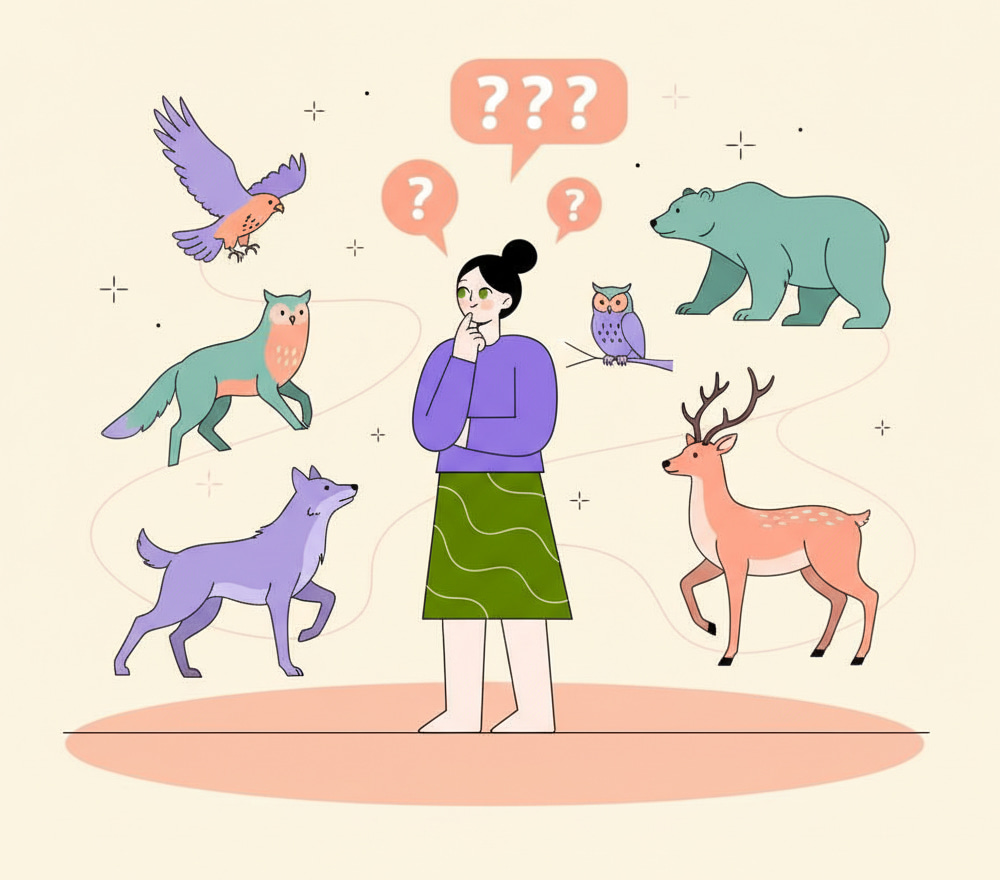
Identify Spirit Animal Guide
Get StartedWhy People Seek a Spirit Animal Connection
Across cultures and generations, people have turned to symbolic animal guides for mirrors, mentors, and meaning. These archetypal companions are not pets or mascots; they are metaphors that help you notice patterns, refine values, and make choices with more presence. When you pause to listen, you may catch symbolic echoes in dreams, books, street art, or unexpected encounters outdoors. Over time, those repetitions form a living language, and that language can clarify strengths, soothe anxieties, and point you toward wiser actions. Because the process is experiential, curiosity and patience go further than rushing to a label or taking a single quiz.
You will get more from this journey by mixing intuition with structure, so your reflection gains traction in daily life. With a thoughtful approach, many readers feel more centered and purposeful after they eventually decide to find my spirit animal through a blend of journaling, mindful time in nature, and well-chosen rituals that match their beliefs and background.
- Learn a respectful, culture-aware framework for interpreting symbols.
- Build a repeatable practice that makes insights actionable.
- Track synchronicities so patterns become unmistakable.
- Translate insights into habits, boundaries, and goals.
Foundations: History, Meaning, and Respectful Language
The roots of animal-guidance traditions span continents, from Arctic storytelling to West African proverb, from Vedic symbolism to the Pacific Northwest. While the specific lineages differ, all emphasize relationship, reciprocity, and responsibility. That means your process should be grounded in humility and care for living cultures, especially when learning from Indigenous teachings that are not for general use. You can still honor the spirit of the idea by focusing on universal practices like observation, gratitude, and ethical action.
Instead of seeking a quick label, consider the underlying question of practice, identity, and purpose. In reflective moments, it helps to ask yourself, with honest curiosity, how do you find your spirit animal without collapsing a complex, sacred idea into a trend or commodity. When you choose service over spectacle, the answers that arise tend to be steadier, kinder, and more useful in real life.
Another helpful reframe is to view this work as a dialogue with parts of the psyche and the wider world. Through that lens, you may gradually notice traits that surface under stress, in creative flow, or when making difficult choices, and those traits can illuminate how to find your inner animal in a way that supports integrity, courage, and compassion while honoring boundaries and context.
The Practical Benefits of Spirit Animal Work
Done well, this practice sharpens self-knowledge and boosts resilience. It gives you a symbolic toolkit for navigating crossroads, smoothing transitions, and celebrating growth. People often report clearer decision-making, better sleep through ritualized wind-downs, and an easier time saying no to misaligned commitments. It also strengthens attention, because you begin to notice repeating motifs in your environment and internal life, which is the soil where insight grows.
Career and relationship choices benefit too, because symbols distill values. Some seekers choose to find out your spirit animal during life shifts such as new jobs, moves, or breakups, using the resulting imagery to map boundaries and build routines. Others explore how to find your power animal so they can call on a specific quality, endurance, discernment, playfulness, or calm, when they step into challenging rooms, stretch skills, or recover from setbacks with grace and perspective.
- Clarity: translate archetypes into weekly priorities and micro-habits.
- Confidence: rehearse responses to stress using symbolic role models.
- Creativity: mine imagery for prompts, art, and brainstorming.
- Community: share insights with trusted peers for accountability.
Reliable Methods: From Intention to Identification
A grounded process starts with intention and proceeds through repeatable observation. Begin by writing a short statement of purpose, then schedule a handful of nature walks free of headphones and hurry. Keep a small notebook to capture what you notice, from feathers and pawprints to billboard critters and song lyrics. Over a few weeks, patterns emerge, and those patterns are your best evidence, not a single omen or viral quiz.
Guided visualizations are especially effective when layered with journaling and sensory detail, because they stabilize attention and reveal personal symbolism. During such practices, you might gently aim to find spirit animal imagery by letting scenes unfold rather than forcing them, and you can later test the meaning by watching how it influences choices, mood, and relationships over time.
If you prefer a writing-first approach, begin sessions with a date, a calming breath, and a warm-up page. After that, some practitioners set a clear intention such as, I’m ready to find out my spirit animal, and then free-write for ten minutes about recent signs, dreams, and coincidences, returning weekly to verify whether the same creature keeps showing up across different contexts.
- Set a purpose statement and timeframe for inquiry.
- Alternate outdoor observation with visualization and journaling.
- Collect evidence; avoid hasty conclusions based on one event.
- Translate meanings into one small behavior you can test this week.
Quick Reference: Symbolic Themes and Practice Prompts
As you gather clues, it helps to compare notes against a compact reference so you don’t project random meanings. This is not a dictionary of absolutes; it’s a starting point for reflection that you can refine with personal experience. While browsing, keep an eye on recurring encounters and stories, because those repetitions often reveal how to find your totem animals through real-world patterns rather than abstract theory.
| Animal | Common Themes | Practice Prompt |
|---|---|---|
| Wolf | Loyalty, leadership, keen intuition | Outline a plan that balances independence with pack support. |
| Owl | Night vision, wisdom, quiet strategy | Schedule a weekly twilight walk to reflect on hidden factors. |
| Bear | Strength, protection, seasonal renewal | Block a rest day and create a simple restorative ritual. |
| Deer | Gentleness, awareness, graceful action | Practice a difficult conversation with softness and clarity. |
| Fox | Adaptability, wit, agile problem-solving | Brainstorm three clever alternatives to a stuck situation. |
| Eagle | Vision, sovereignty, higher perspective | Zoom out on a goal and define one long-range milestone. |
| Turtle | Patience, longevity, grounded steadiness | Slow one process by 20% and notice the quality gains. |
| Butterfly | Transformation, lightness, grace under change | Let go of one outdated identity with a simple release ritual. |
Use these themes as hypotheses and test them in daily life with small experiments. Over time, you might notice an especially persistent ally stepping forward, which can clarify when to journal, when to move, and when to rest. That lived evidence makes it easier to find my totem animal with confidence, because your conclusion is anchored in repeated, meaningful experience rather than momentary novelty.
Interpreting Signs, Keeping a Journal, and Deepening the Bond
Interpretation improves with structure. Give each journal entry a title, a few sensory details, and a line for plausible meanings. Then add a final line labeled “action,” where you translate symbolism into a single behavior, call a mentor, practice a boundary, or take a walk without your phone. Over weeks, these actions form a bridge from imagery to embodied wisdom, which is the heart of this practice.
As your notes accumulate, you will likely sense patterns of timing, emotion, and environment. In that rhythm, it becomes more natural to find your animal spirit showing up not only in dreams and synchronicities, but also in how you solve problems, choose words, and treat your body, which turns the symbol into a steady ally rather than a passing curiosity.
Community can accelerate this learning curve, provided it honors consent and cultural boundaries. In some circles, shared ceremonies, respectful storytelling, or dreamwork can help you find your totem animal through gentle reflection and feedback, while keeping the process personal, ethical, and aligned with the values of the group you belong to.
- Title each entry and tag it with mood, place, and notable motifs.
- End with one realistic action, then review results weekly.
- Share patterns with a trusted friend or mentor for perspective.
Ethics, Pitfalls, and Staying Grounded
This is meaningful work, and it deserves care. Avoid appropriating ceremonies or terminology reserved for specific communities; prioritize sources that invite broad participation without borrowing what isn’t offered. Beware confirmation bias and wishful thinking by keeping a clear record of evidence and outcomes. When possible, seek mentors who can balance imagination with discernment, so your practice remains both inspiring and responsibly tethered to reality.
Marketing hype can also distort expectations by overpromising easy answers. A more reliable approach starts with a small, repeatable habit and a service-oriented mindset. Many people wonder, especially at the beginning, how can i find out my spirit animal while honoring tradition, and the best answer is to slow down, listen closely, and act in ways that support both your growth and the well-being of the people and places around you.
Faq: Clear Answers to Common Questions
What’s the difference between a symbolic ally and a favorite animal?
A favorite is a preference; an ally is a pattern. One is about taste, the other about recurring guidance that appears in dreams, stories, and encounters over time. Track repetition, emotional resonance, and practical impact to tell them apart, and favor lived evidence rather than a single, exciting moment or a trend seen online.
Are online quizzes useful or just entertainment?
Quizzes can spark ideas, but they are a starting point, not a final verdict. Use them to generate prompts for journaling and observation, then test those prompts in your real schedule. If the suggested creature improves your choices and steadies your mood consistently, you’re closer to a meaningful match.
How long does a discovery process usually take?
Timelines vary widely. Some people notice a clear pattern within a month, while others explore for a season or more before a theme stabilizes. Set a time box, say, four to eight weeks, and commit to weekly walks, short visualizations, and a concise journal so the process gathers momentum without pressure.
Can the guiding creature change as I grow?
Yes, themes can evolve. Major life chapters may invite different qualities, and your symbolic companion may shift accordingly. Rather than forcing continuity, let the evidence speak. If new motifs arrive and genuinely help you act with integrity, allow the bond to adapt while honoring what previously served you.
What if I’m skeptical but still curious?
Skepticism is welcome. Treat this as a structured experiment in attention and meaning-making. Create hypotheses, run small trials, and evaluate outcomes. If the practice improves your decisions, boundaries, and well-being, keep going; if not, you can thank the process, note the lessons, and choose another reflective tool.